
What Yoga Actually Does For Your Climbing
What Yoga Actually Does For Your Climbing
A look at the physical and less obvious ways a yoga practice translates to the wall
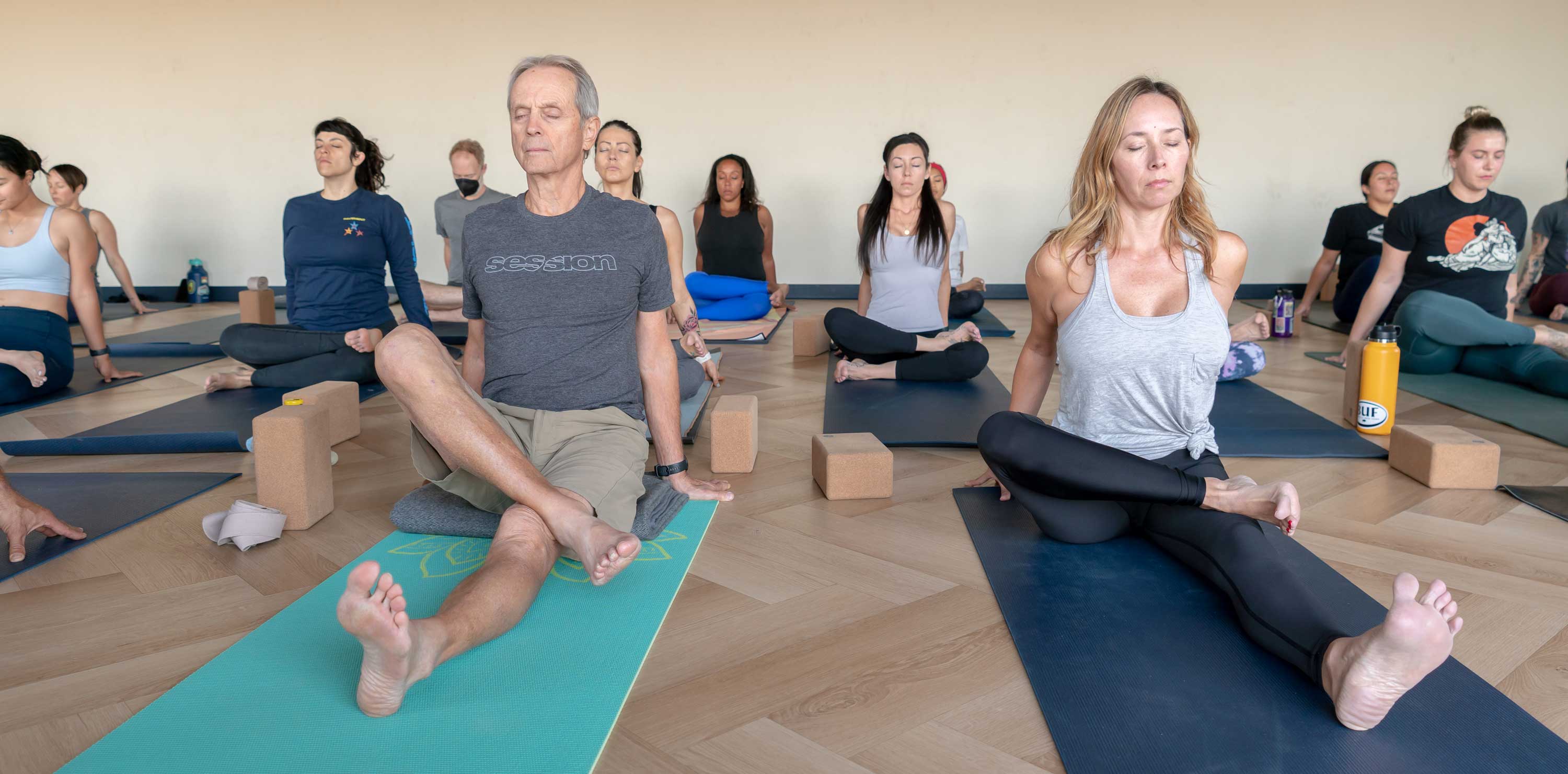
I start every yoga practice by asking climbers what’s present in their bodies and what they’d like to focus on. The most common request I get is to focus on the hips and shoulders. They show up tight and often seek out yoga for support with flexibility and building strength. The longer I’ve taught yoga to climbers, the more I’ve noticed that the people who stick with it aren’t just reaping the physical benefits, they’re seeing performance improvements that come from what happens in their head on the wall, and the research explains why.
What a pulling-dominant sport does to your body
Climbing is a pulling-dominant sport. It loads the posterior chain of the upper body, lats, biceps, forearm flexors, and rhomboids, heavily and repeatedly, while the lower body develops shortened hip flexors and hip external rotators from sustained flexed and externally rotated positions. Over time, that creates predictable patterns: hips that resist high steps, a thoracic spine that loses extension, and shoulders that round forward as the pec minor and lats tighten and the serratus anterior loses its ability to maintain proper scapular rotation. Research on overhead-reaching athletes consistently identifies these imbalances as significant predictors of shoulder and elbow pathology.
Yoga addresses them directly. What’s shortened is lengthened, and what’s been neglected works under load: the pushing mechanics of chaturanga and plank, the scapular stabilizer work in arm balances, and wrist extension load that climbing infrequently requires.
What determines whether those movements are helpful to our bodies and overall performance depends on how they are done. A chaturanga moved through quickly becomes momentum rather than building useful stability: the elbows flare, the scapulae disengage, and the transition that could be strengthening the serratus anterior and teaching the shoulder new patterns instead places repetitive stress on the anterior shoulder capsule, the same structure climbers are often already managing. The slow, aligned version is a different movement entirely. The eccentric control on the way down, elbows tracking back, scapulae staying organized. That’s where the strength is, and that’s where the proprioceptive mapping happens. Your nervous system needs time to learn a pattern. Rushed transitions don’t give it that.
On the flexibility side, the reason a regular yoga practice is supportive is fairly straightforward. Sustained stretching held in the 30-90 second range is where the tissue itself adapts, not just your nervous system’s tolerance for the sensation, but also the actual length the muscle-tendon unit can reach. That’s the difference between feeling temporarily more open after a session and actually moving differently on the wall over time.
Slow, deliberate, load-bearing movement, which describes a good portion of a yoga practice, also trains the sensory nerve endings in your joints and connective tissue to send more precise signals to the brain. Better proprioception shows up as better footwork, cleaner weight transfers, and an improved ability to sense what a hold actually requires rather than defaulting to maximum effort.
Where breath and attention come in
Climbing is somewhat unusual as a sport in that perceived threat, not just physical output, plays a real role in how you perform. The fear of falling, even in completely safe circumstances, produces a measurable sympathetic nervous system response: heart rate climbs, peripheral blood vessels constrict (which accelerates forearm pump independently of the actual effort), and motor patterns that were reliable in the gym start to degrade. It doesn’t always correlate with actual difficulty. That’s exactly what breath training addresses.
I’ve watched students arrive barely able to breathe through a challenging pose, and over months of practice find that same pose becomes grounded and meditative. Slow, nasal, diaphragmatic breathing, the kind emphasized in any breath-centered practice, activates the vagus nerve and increases heart rate variability, which is essentially a measure of how flexibly your autonomic nervous system can shift between states. Studies on slow breathing at around five to six cycles per minute show meaningful improvements in vagal tone, reduced perceived exertion, and faster physiological recovery between efforts. The extended exhale, in particular, has a direct calming effect on the nervous system. Your heart rate naturally drops on the exhale, and a longer exhale prolongs that response.
Holding a difficult pose while breathing slowly is the same neurological task as staying composed on the wall under stress. You’re practicing the same skill in a lower-stakes environment.
It goes deeper than the breath. Consistent meditative practice develops what researchers call interoceptive accuracy, the brain’s ability to read its own internal state clearly. Neuroimaging studies have shown that mindfulness-based practices produce structural changes in the insular cortex, which is the region responsible for processing signals like early pump, excess grip tension, and the difference between fear-driven bracing and actual structural load. A climber who can accurately detect those signals in real time has more useful information to work with.
Yoga also trains attention directly. Research in neuroscience has shown that meditation practice quiets the part of the brain responsible for mind-wandering and self-focused rumination during task performance. For a climber, that translates to less mental interference from the narrative running alongside the climbing: the memory of a previous fall, anxiety about the crux, or commentary on forearm fatigue. Meditators manage that kind of attentional drift measurably better. Additionally, techniques we practice in yoga like deep breathing, self-compassion, and viewing anxiety as a signal rather than a catastrophe help us move past difficult moments on the wall.
I teach students of every age and experience, and the entry point is always the same: just show up. The physical benefits come first. The subtler stuff, the breath regulation, the attention, and the composure under pressure, takes repetition. Just be patient, and keep practicing.
About the Author:
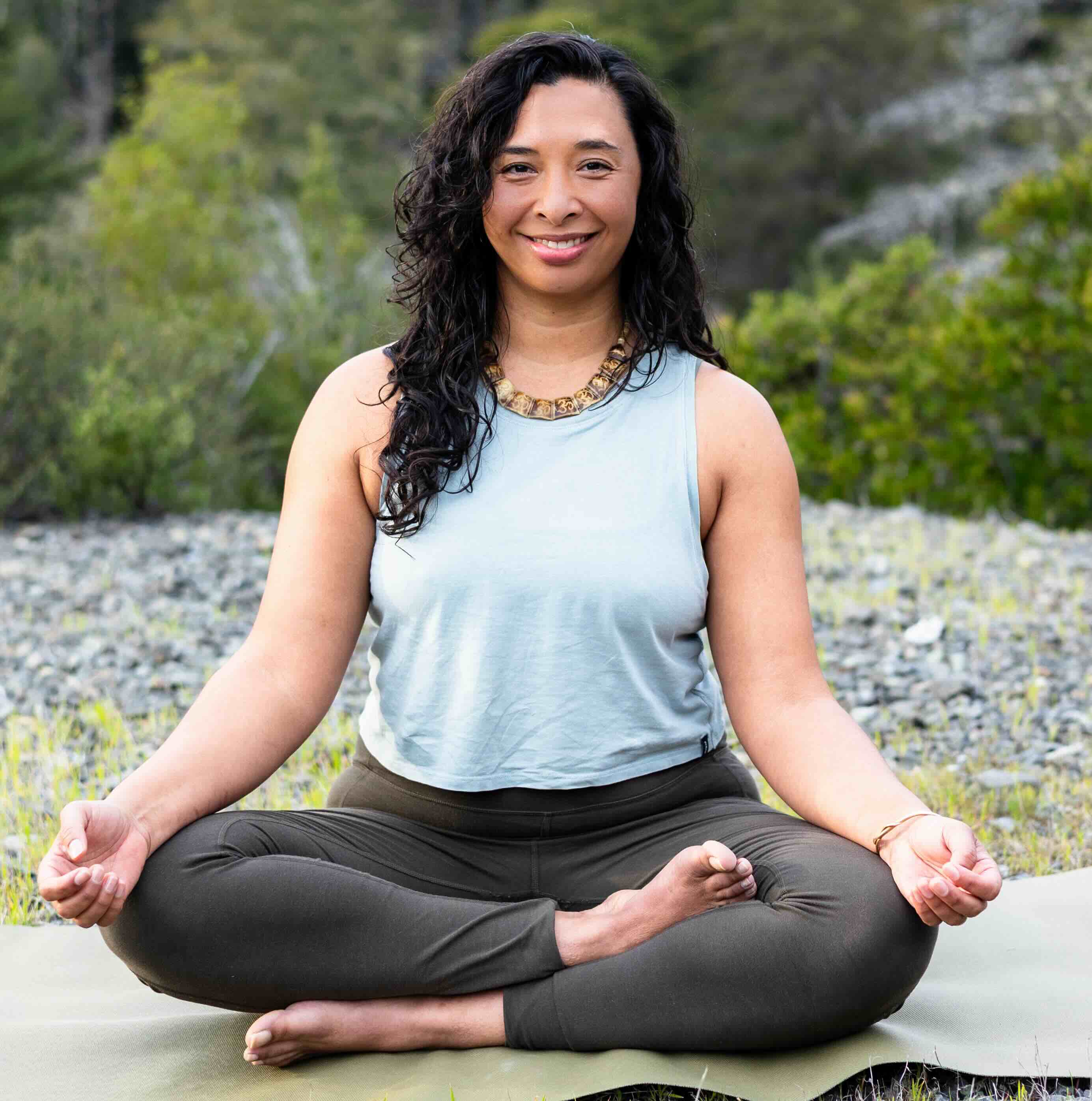
Francisca Lizotte is the owner of Common Thread Yoga and a Yoga Instructor, California Naturalist, Herbalist, and Trail Guide whose teaching weaves together breathwork, meditation, and somatic nervous system practices with Hatha, Vinyasa and Restorative yoga. Originally trained in 2013 with a Philosophy degree from Cal Poly, SLO, she is a resident teacher at Session Climbing and teaches across a wide range of environments, from yoga hikes and summer camps to corporate and community settings, with a focus on making yoga accessible to every body. Follow her on Instagram @commonthreadyoga
PC: @ellenkeithphoto
